KH0033/AS031, UR1031, UR044 - Colored Pendant Sums
Drawings:
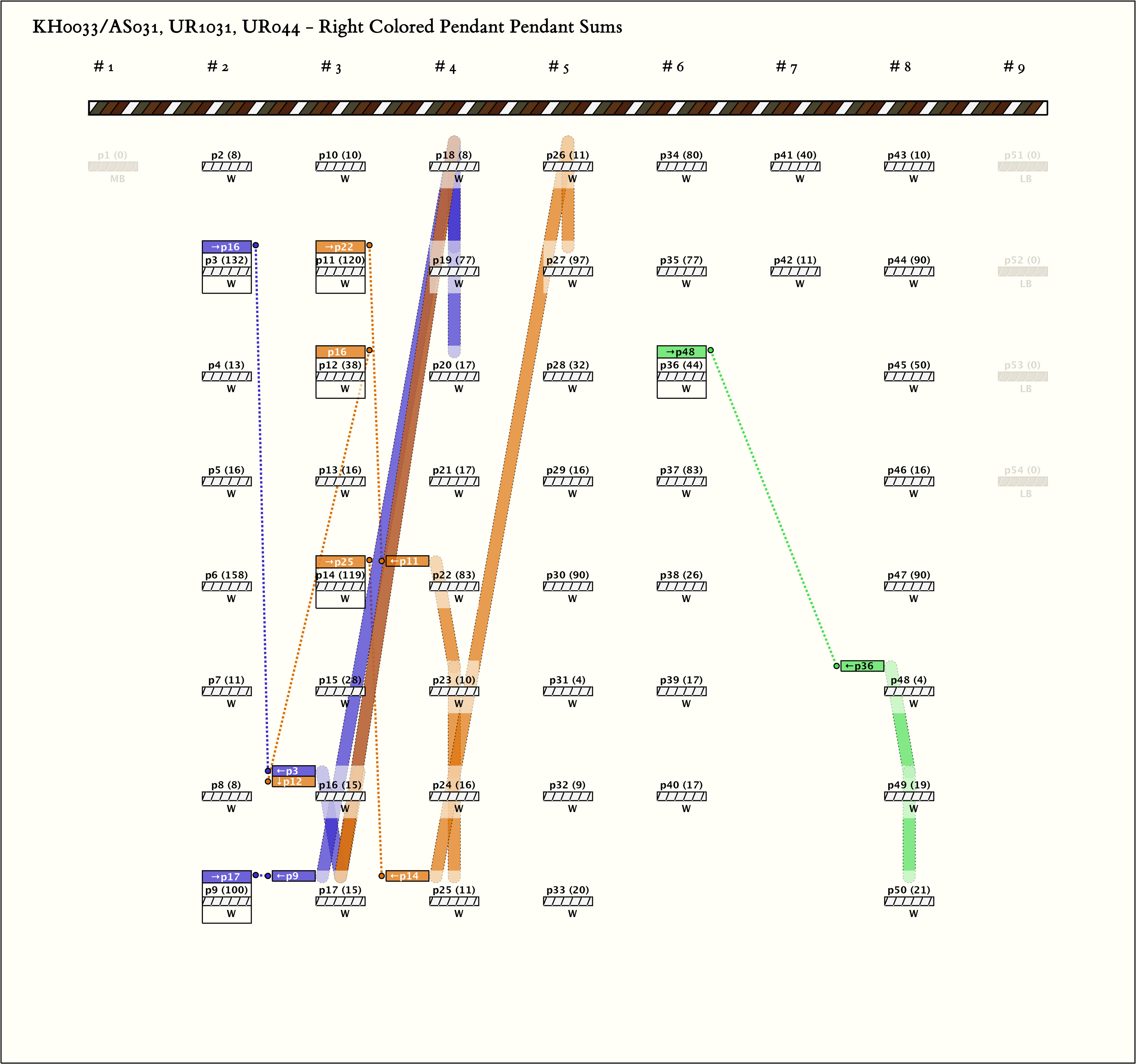
Right Handed Sums: # Sums = 6, Max # Summands = 5, (Min, Mean, Max) Sum Values = (38, 92, 132)
Click on Image to View Larger
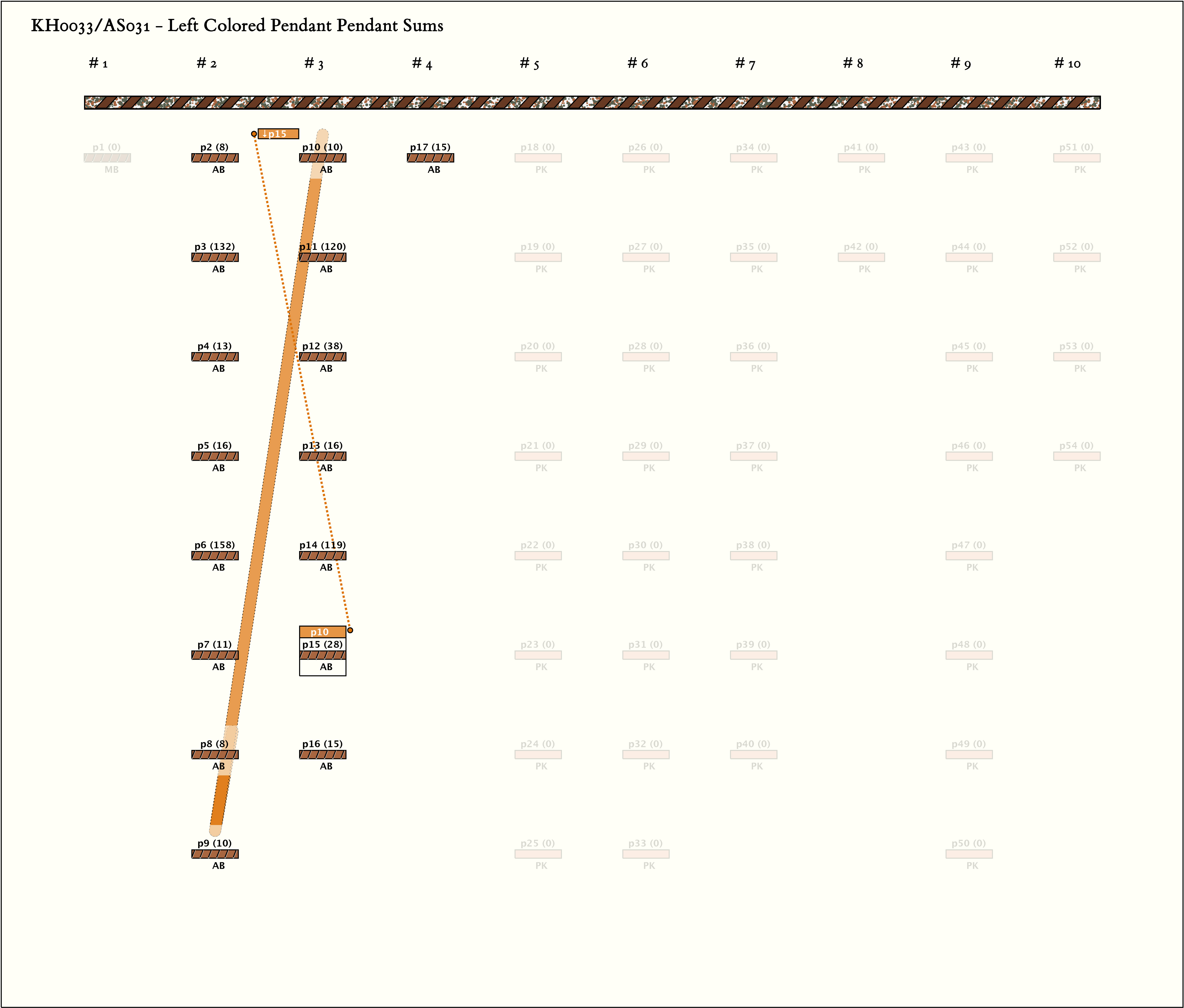
Left Handed Sums: # Sums = 1, Max # Summands = 3, (Min, Mean, Max) Sum Values = (119, 119, 119)
Click on Image to View Larger
Right Handed Sum Detail: - Click on column name to sort
| # | Color | Sum Schema | Sum Cord | Sum Cord Value | # Summands | Summands |
|---|---|---|---|---|---|---|
| 1 | 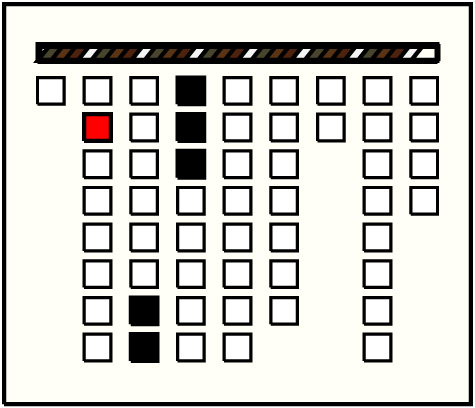 | g2p2 : 132W | 132 | 5 | g3p7: 15W + g3p8: 15W + g4p1: 8W + g4p2: 77W + g4p3: 17W | |
| 2 | 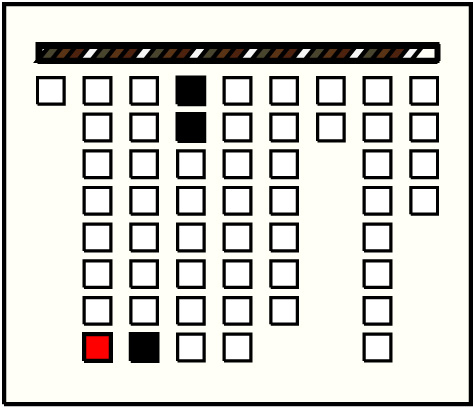 | g2p8 : 100W | 100 | 3 | g3p8: 15W + g4p1: 8W + g4p2: 77W | |
| 3 | 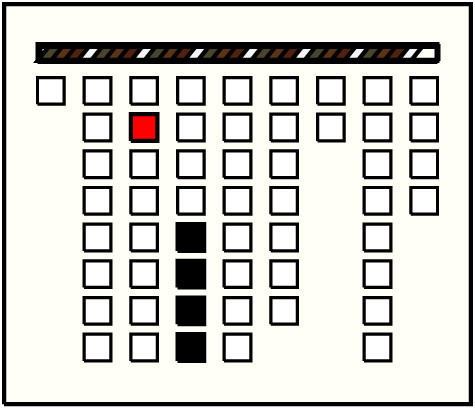 | g3p2 : 120W | 120 | 4 | g4p5: 83W + g4p6: 10W + g4p7: 16W + g4p8: 11W | |
| 4 | 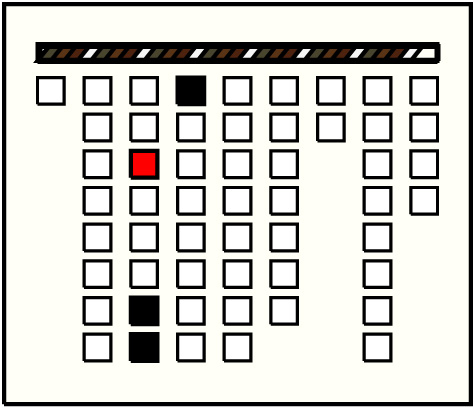 | g3p3 : 38W | 38 | 3 | g3p7: 15W + g3p8: 15W + g4p1: 8W | |
| 5 | 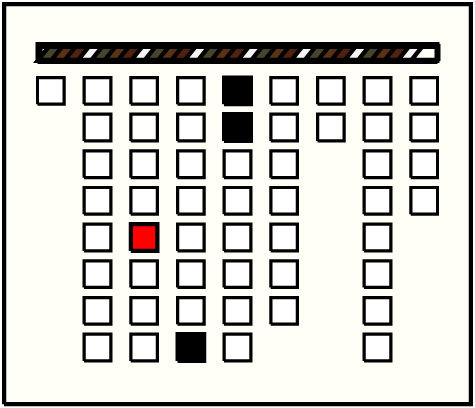 | g3p5 : 119W | 119 | 3 | g4p8: 11W + g5p1: 11W + g5p2: 97W | |
| 6 | 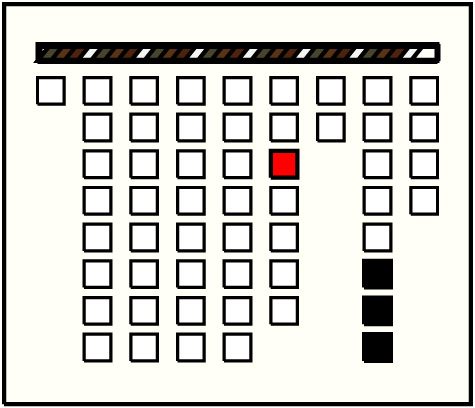 | g6p3 : 44W | 44 | 3 | g8p6: 4W + g8p7: 19W + g8p8: 21W |
Left Handed Sum Detail: - Click on column name to sort
| # | Color | Sum Schema | Sum Cord | Sum Cord Value | # Summands | Summands |
|---|---|---|---|---|---|---|
| 1 | 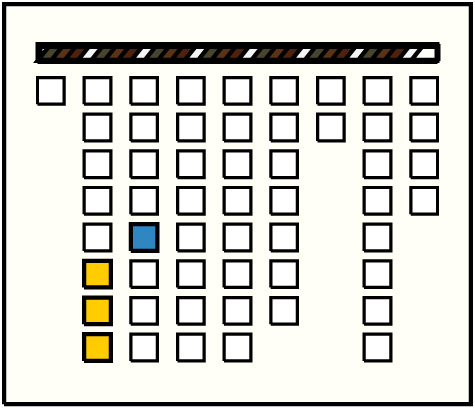 | g3p5 : 119W | 119 | 3 | g2p6: 11W + g2p7: 8W + g2p8: 100W |
Khipu Notes:
Ascher Databook Notes:
- This khipu can be viewed as six groups of 8 pendants (assuming that it is the 4th pendant in the 5th group that is not present) with 3 additional pendants (1, 41, 42) and a final group of 4 blank pendants (51-54). Referring to them as groups 1, 2, 3, 4, 5, 6, the following regularities are noted:
- All pendants in a group are the same color. Group 5 is LB/W and the rest are W.
- For all 6 groups, there are subsidiaries on pendants 2 and 5.
- For all 6 groups, the values of pendants 2 and 5 are between 77 and 158 while the values of the other six pendants are each less than 59. When subsidiary values are added to pendant values, the values of positions 2 and 5 are increased so that they are between 120 and 163(+?), but the values of the other 6 positions remain less than 59. Alternate groups show similarities:
- For groups 1, 3, 5: P5 > P2 > P4 ≥ P3 > {P7,P8 ; Pl=8}
- While for groups 2, 4, 6: P2 > P5 > P3 > P4; P4=16
- For groups 3, 5: Pl=8 ; P2=77; P5=83
- While for groups 4, 6: P4=16; P5=90; P6=4
- There seem to be an excessive number of values that are multiples of 8 or 11. Of forty-four unbroken, nonzero pendant values, 12 are multiples of 8, and 8 are multiples of 11. When subsidiary values and pendant values are considered, of sixty-five values, fifteen are multiples of 8 and twelve are multiples of 11. The multiples of 8 that appear are 8, 16, 24, 3 2, 40, and 120. The multiples of 11 are 11, 33, 44, 55, 77, and 132.